










Chongqing Zoo has a secret rhythm, and every traveler who learns it calls it the difference between a good day and a great one: the giant pandas — all 23 of them — are at breakfast from 08:30 to 11:00, doing their liveliest climbing and munching before retreating indoors for their naps. Time your visit to the animals’ clock rather than your own, and the zoo’s 4.7 rating starts making sense on arrival. This guide covers the best hours, the best seasons, the crowd patterns recent travelers actually experienced, and the one afternoon window that quietly works almost as well as the morning.
Key takeaways
- Open daily 08:00–18:00, last entry 16:30 — the recommended visit is 3–5 hours, so opening time is the natural start.
- Panda feeding windows: 08:30–11:00 is prime time; a second burst arrives around 14:00–15:00. After 11:00 most bears nap indoors — 3–4 usually stay visible.
- Weekdays beat weekends — holiday weeks (Chinese New Year, Golden Week) draw the year’s biggest crowds.
- Spring (March–May) and autumn (September–November) bring Chongqing’s kindest walking weather; summer heat is real — and the indoor Polar Kingdom is the escape.
- The 08:00 gates reward early birds — no queue, cool air, and five minutes of walking between the entrance and the pandas.
Quick answer: visit on a weekday, walk in at 08:00 with an online e-ticket from $3.61, and go straight to the Panda House for the breakfast hour.
The day at Chongqing Zoo, hour by hour
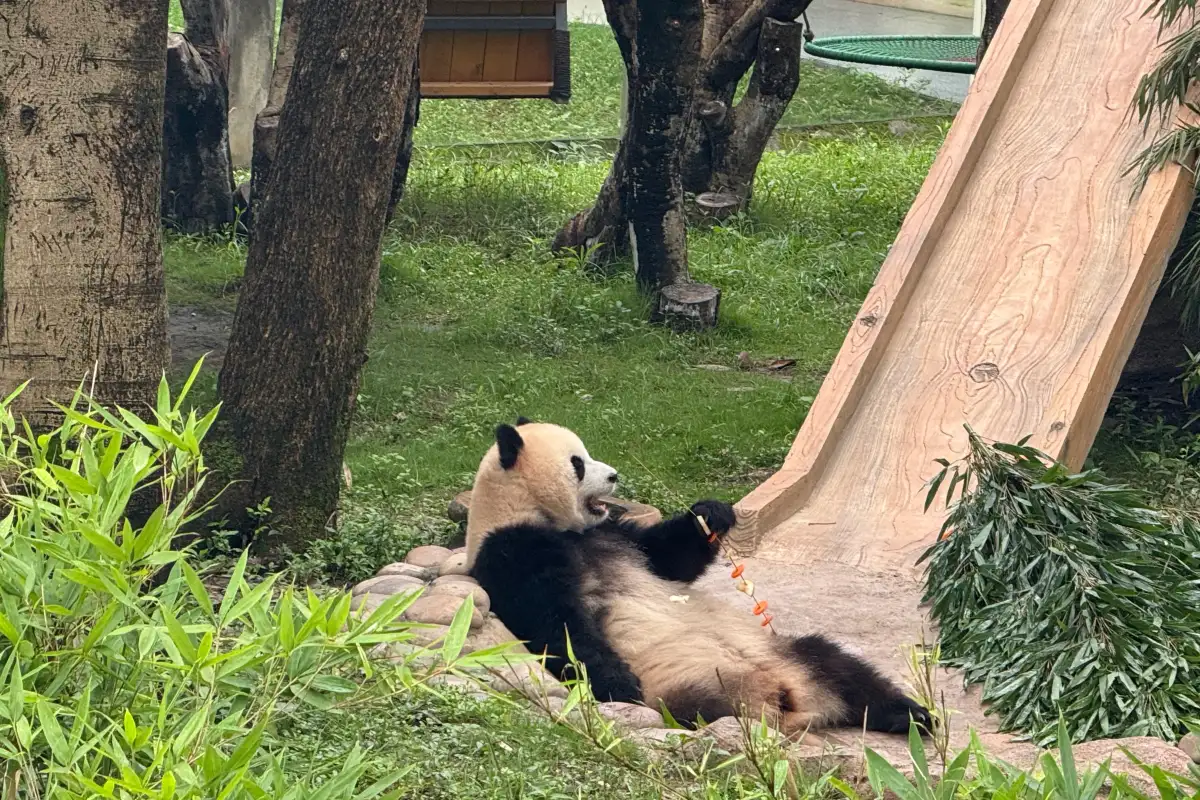
The zoo’s schedule belongs to the animals. The pandas eat 08:30–11:00 — and reviewers are unanimous that watching them at breakfast is the visit’s best hour: bears climbing frames, hoarding radishes, rolling around with what one traveler called “lively, free-roaming” energy. After 11:00 most pandas go indoors for their nap, and the panda pavilion thins out fast.
Midday belongs to the indoor halls. The Polar Ice & Snow Kingdom runs all day — its penguins race underwater whenever the crowd shows up — and the walk-through parrot aviary keeps its feeding sessions going. Then around 14:00–15:00 a second feeding window wakes a few pandas, and travelers who stayed report spotting 3–4 bears outdoors in a noticeably calmer park. One reviewer who arrived at 15:00 still counted it a success: “There are the ‘foodie’ types seriously eating bamboo, and the ‘lazy’ types just lounging around — cuteness overload!”
Worth knowing: the zoo stops admitting visitors at 16:30, an hour and a half before closing. If you arrive late, you will still get in before then — but the pandas will be napping and the tiger decks quieter, so set expectations accordingly.
The best seasons
- Spring (March–May) — mild temperatures, fresh bamboo, and the cub nursery at its busiest after winter births. The best all-round season.
- Autumn (September–November) — Chongqing’s famous heat finally breaks; comfortable walking and reliably active animals. Late September visitors report pandas “out and about” all morning.
- Summer (June–August) — hot and humid, but the animals adapt: pandas nap harder, so come at opening and finish indoors at the penguin pool. The air-conditioned halls earn their ticket.
- Winter (December–February) — cool, misty and dramatically quieter. Pandas are cold-weather animals and winter often brings the most energetic outdoor behavior of the year.
Crowds, weekends and holidays
Chongqing Zoo is a working city zoo with an international reputation, and the crowd math is simple. Weekdays — any weekday — are calm; one October visitor “expected queues” and found none. Weekends bring local families in force, with the parrot aviary and panda hall at their liveliest. The genuinely crowded days are the Chinese public holidays: Chinese New Year, Labor Day (early May) and Golden Week (early October). If your trip falls in those weeks, an 08:00 arrival is not optional — it is the entire strategy.
The afternoon silver lining: even on busy days, crowds thin noticeably between 14:00 and 16:00. Recent travelers describe that window as “smaller crowds between 2–4 PM” and use it for a second, gentler lap of the park.
Weather strategy
Chongqing is called the “fog city” for a reason: humidity, sudden rain and summer heat that regularly clears 38°C. Pack a light poncho in any season, sunscreen and a hat in the warm months, and comfortable shoes for the zoo’s hilly paths. The smart summer plan flips the usual order: pandas at 08:30, red pandas and tigers by mid-morning, then the indoor halls — Polar Kingdom, aviary — through the hottest hours, with a second outdoor lap in the late afternoon if legs allow.
Our recommended timing plan
- 08:00. Gates. Walk straight to the Panda House — the lower hall first, then the panoramic upper level before crowds build.
- 09:30. Red panda grove while the big pandas keep eating — the grove is quietest mid-morning.
- 11:00. South China Tiger Center decks as the tigers patrol; then lunch (snacks you brought, or the park café).
- 13:30. Polar Ice & Snow Kingdom and the parrot feeding — the indoor hours beat the heat.
- 15:00. Second panda lap during the afternoon feed window, then the garden zone on the way out.
Frequently asked questions
Is it worth going in the afternoon?
Yes — with calibrated expectations. Travelers report 3–4 pandas typically stay visible outdoors all afternoon, the parrot feeding runs all day, and the crowd-thinning between 14:00 and 16:00 is real. If pandas are the entire purpose of your trip, come for the 08:30 breakfast instead.
Which day of the week is quietest?
Any weekday, and Tuesday-to-Thursday are the safest bets. School groups cluster on weekday mornings but move fast and clear by lunch. Avoid the Chinese public-holiday weeks if you can — those are the zoo’s genuinely packed days.
What if it rains?
Bring a poncho and carry on — the pandas love cool, wet weather and stay out longer. The indoor halls (Polar Kingdom, aviary, reptile house) cover the heaviest hours, and the pavilions have covered walkways between them.
How long should I plan to stay?
3–5 hours covers the zoo comfortably: the Panda House with both levels, the red panda grove, the tiger center, the indoor halls and the garden zone. With a second panda lap and a slow lunch, half a day disappears happily.
Book your ticket for the breakfast hour
Be there when the bamboo comes out
Instant confirmation, any international card, e-ticket entry — and a 08:00 start that puts you at the panda breakfast before the city wakes up.
For the rest of the plan: the Visitor Guide has the full half-day route, the itineraries guide scales it to 3, 4 or 5 hours, and the highlights guide ranks the eight encounters worth building a day around. Getting there is the easiest metro run in the city — see the transport guide.
Sources & official references
- Trip.com — Chongqing Zoo attraction listing (checked October 2026): hours 08:00–18:00, recommended sightseeing time 3–5 hours, tickets from $3.61.
- Verified traveler reviews on Trip.com (16,517 reviews, 4.7/5 average) for feeding windows, crowd patterns and seasonal behavior.
- Official zoo ticket hotlines +86-23-63817001 / +86-23-68433494 for same-day schedules.
- On-site signage and feeding schedules, verified by our editorial team on 2025–2026 visits.
